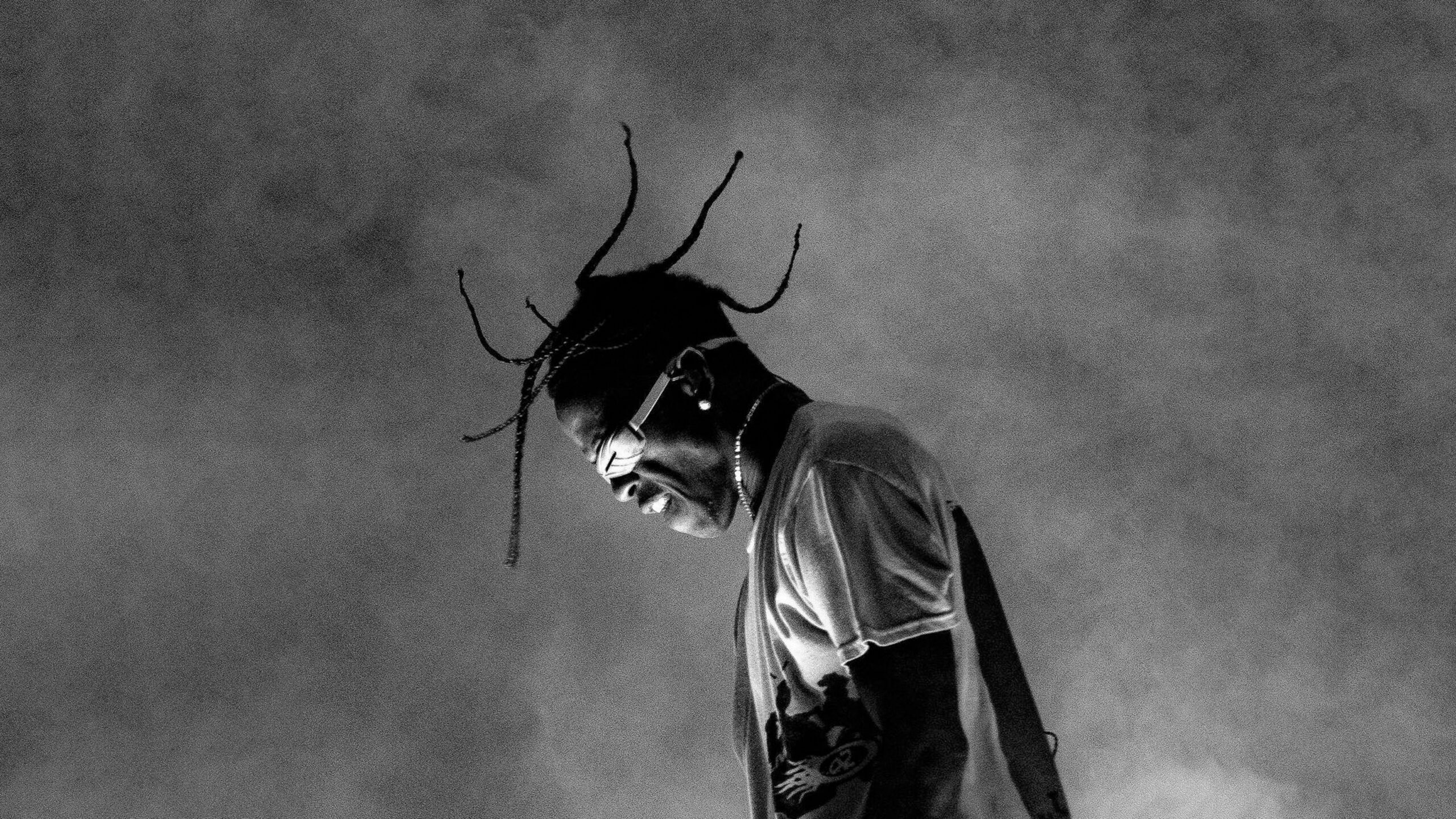
Genius of Travis Scott
Enter the world of Travis Scott
Who is Travis Scott?
Travis Scott is one of the most influential rappers, singers, and producers known in history. His signature blend of hip-hop, trap, and psychedelic sounds has set him apart in the music industry, making him a defining figure of contemporary hip-hop. Rising from Houston, Texas, he gained mainstream success with albums like Astroworld, which topped charts and earned critical acclaim. His music, characterized by atmospheric production and hypnotic flows, has led to multiple platinum records and Grammy nominations. His impact on the music industry continues to grow, cementing his legacy as one of the most influential artists of all time.
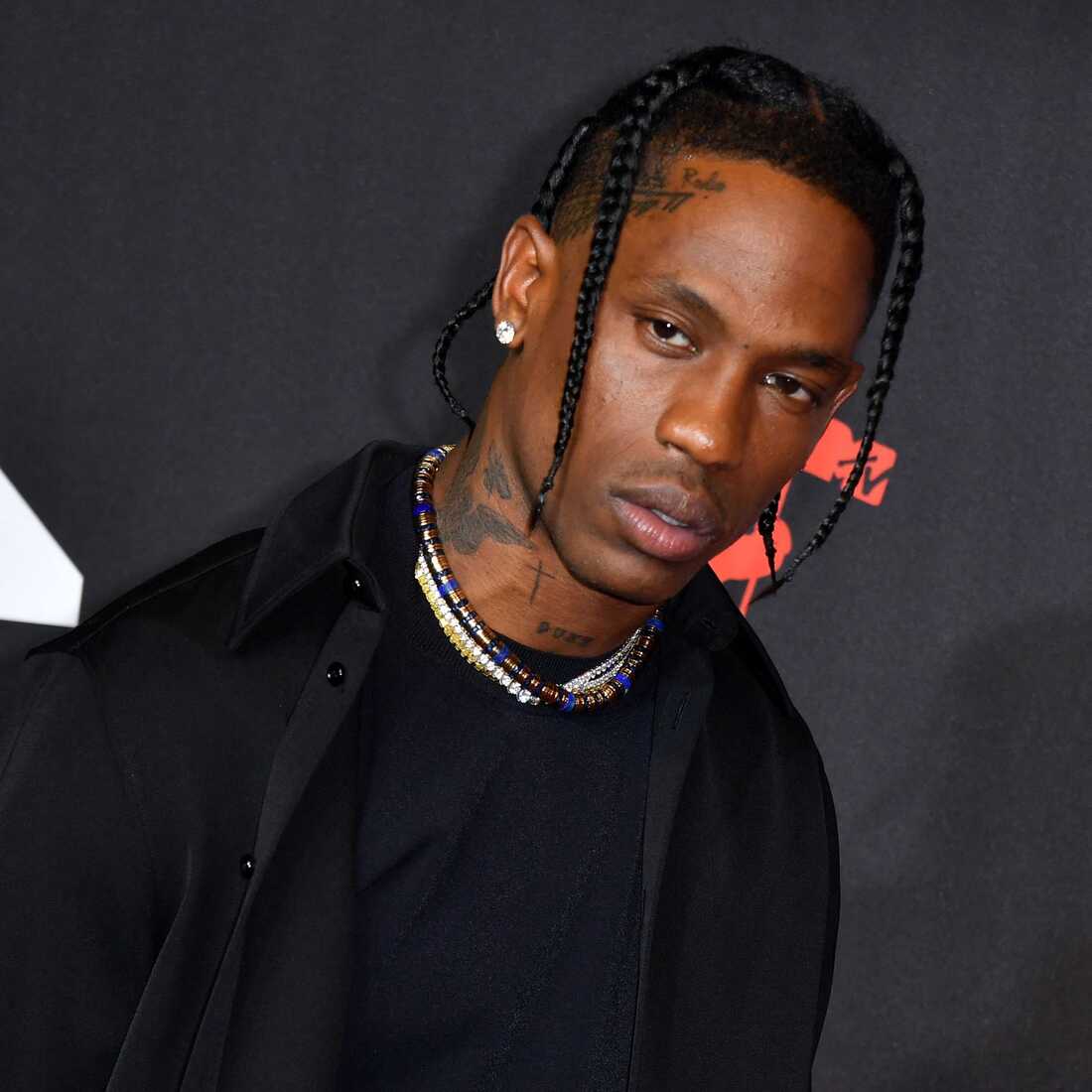
Unpacking ASTROWORLD: A Deep Dive into SICKO MODE
Travis Scott’s 2018 album ASTROWORLD was a defining moment in hip-hop history, as the album, blends rap, psychedelia, and trap into an immersive soundscape. In the album, one of the most popular songs is SICKO MODE, a song that stands out for its unpredictable structure, layered production, and unique energy. This projoect will look to break down SICKO MODE from multiple angles, from its sound, lyrics, metadata, and historical impact to better understand what make sit one of the most innovative songs in modern hip-hop.

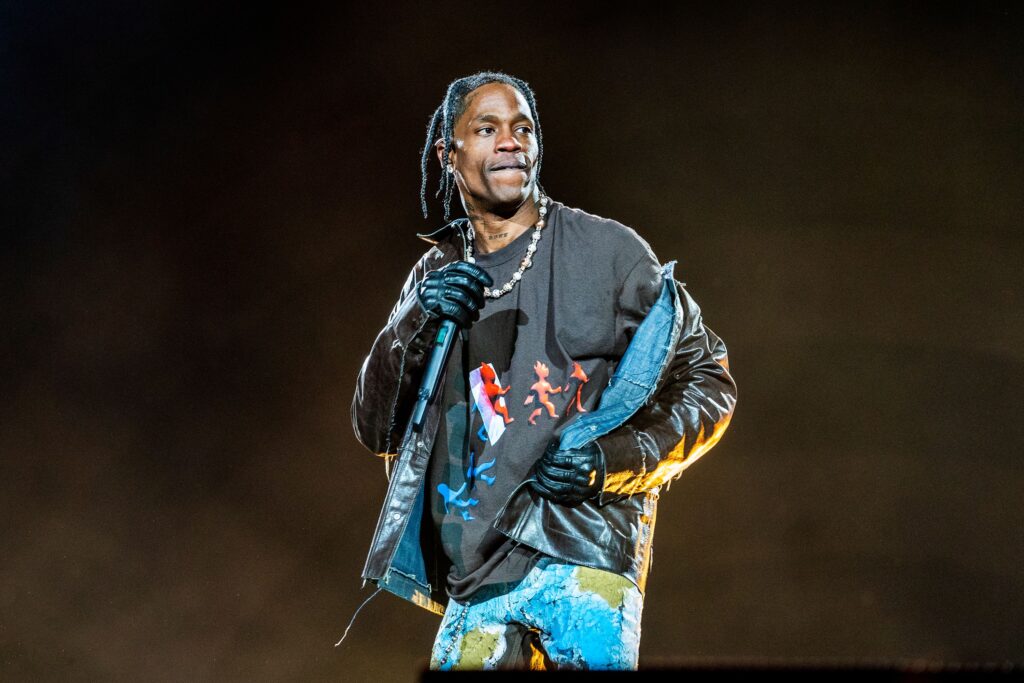
TIMELINE ANALYSIS
Travis Scott has redefined modern hip-hop through his innovative sound and psychedelic-blending production. From his early days with GOOD MUSIC to Rodeo, he created a unique style of psychedelic-infused trap style music which set him apart from all other artists. His mainstream success breakthrough with Birds in the Trap Sing McKnight, refined his sound and defined what modern hip-hop is today. However, it was SICKO MODE from ASTROWORLD that truly changed the landscape of hip-hop. With its unpredictable beat switches, three-part structure, and layered production, the track created a new standard for experimentation in music. Its success inspired countless artists to explore more complex, multi-section compositions which shifted the entire genre toward a more dynamic and immersive listening experience. With Utopia, Travis continues to push boundaries, incorporating industrial and electronic elements which further solidified his lasting impact on hip-hop and its evolution.
SICKO MODE Waveform Analysis

Intro & First Section (0:00 – 0:55)
SICKO MODE opens with Drake’s moody vocals over minimal, atmospheric beat, reflecting on the low-amplitude waveform. At 0:29, the bass intensifies slightly, maintaining control. At 0:52, a brief waveform dip marks a beat switch, introducing a new instrumental.

First Beat Switch & Second Section (1:00 – 2:00)
At 1:00, the energy surges as bass-heavy beat drops, causing a sharp waveform spike. Travis Scott’s verse follows a fast-paced trap instrumental. By 1:36, the beat smooths out, becoming more subdued with shoftened percussion and a slightly slower pace. The intensity eases, allowing for a more atmospheric feel. As it nears 2:35, the instrumental begins to strip back, hinting at another beat shift.

Second Beat Switch & Third Section (2:00 – 3:16)
At 2:48, a second beat switch brings a darker, stripped-down sound, followed by a brief waveform dip. The tempo slows, with deep bass and eerie sounds, creating a spacey feel. Travis Scott’s flow shifts to a more hypnotic beat. By 2:56, Drake’s final beat switch erupts with a high-energy, bouncy instrumental. The waveform bounces up and down as the production shifts into a more explosive, hard hitting sound which revives the intensity of the track.
Waveform Narrative Analysis
Few songs in modern hip-hop have pushed the boundaries of music like SICKO MODE. Released in 2018 as part of Travis Scott’s Astroworld, the track became an instant cultural phenomenon, known for its unpredictable beat switches, immersive production, and layered vocal manipulation. SICKO MODE presents a turning point in hip-hop production, showing how Auto-Tune, beat transitions, and experimental structuring can redefine the listening experience. Rather than following the traditional verse-chorus structure, SICKO MODE constantly shifts in structure, creating multi-dimensional experience which reflects the larger evolution of hip-hop.
One of the most striking elements of SICKO MODE is its use of Auto-Tune as an instrument, not just a vocal effect. According to Ben Duinker in “Auto-Tune as Instrument: Trap Music’s Embrace of a Repurposed Technology”, Auto-Tune has evolved into a key feature of contemporary trap music, shaping mood and structure rather than simply correcting pitch (Duinker, 2025). This is evident throughout SICKO MODE, where vocal processing varies based between the sections. At the start of the track, Drake’s Auto-Tuned voice hovers over an ambient, almost dreamlike beat. The soft, minimal percussion creates a sense of anticipation, and the waveform reflects this. As Duinker explains, Auto-Tune can be used to detach vocals from the beat, making them feel ethereal and slightly robotic (Duinker, 2025). This effect is emphasized by the momentary silence before the first beat switch, shifting the overall vibe of the track.
At 1:00, the song shifts dramatically, introducing a heavy bass beat that contrasts sharply with the airy intro. The waveform spikes, reflecting the dense soundscape, as Travis begins his part. His vocals are in full use of Auto-Tune, blending perfectly with the instrumental and vibe of the beat. His voice becomes an extension of the beat, reinforcing Duinker’s argument that in trap music, Auto-Tune is applied in real-time as an active part of composition (Duinker, 2025). The robotic tuning of Scott’s voice adds to the futuristic, high-energy feel of this section, making the audience immerse into the otherworldly vibe of the track. This production technique embraces Auto-Tune not just as an effect, but also as a crucial part of their identity.
But the most defining feature of SICKO MODE is its experimental structure, which challenges the traditional songwriting norms. The second major beat switch at 2:48 completely resets the song’s energy, shifting to a slowed-down, eerie instrumental with deep sub-bass. Travis Scott’s flow adapts, becoming more laid-back and hypnotic. The waveform shows another small dip in amplitude, reflecting the track’s bouncy deep-bass production. This shift in hip-hop style refined hip-hop in a way where abrupt beat changes and unpredictable structures have become increasingly common, moving away from rigid, structured song formats. SICKO MODE set a precedent for this style, proving that songs could be dynamic and unpredictable. Its use of Auto-Tune as an integral instrument, while also pushing for dramatic beat switches pushes the boundaries of hip-hop into a new level. The track’s influence had a major impact in hip-hop culture, proving that innovation in hip-hop isn’t just about the lyrics or flow, but about the sound itself.
Transcription Analysis of SICKO MODE
A transcription analysis of SICKO MODE highlights the challenges of accurately processing its lyrics due to slang, ad-lins, and complex vocal delivery. The Word Error Rate came out to 0.35647, so approximately 36%. This suggests that automatic transcription struggles with the song’s dynamic structure, including multiple beat swithces and overlapping vocals. Slang terms like “LaFlame” and “stife”, along with ad-libs such as “It’s lit!” and “Gimme the loot!”, are often misinterpreted or omitted. Additionally, the track’s frequent repition of phrases like “yeah”, “someone said”, and “like a light” allows for a hypnotic and rhythmic effect. Melodically, SICKO MODE features descending note patterns, with Auto-Tune giving it a robotic, immersive feel. Its vocal effects and unconventional structure create a unique sound that pushes the boudaries of hip-hop.

Trancription Narrative Analysis
From the transcription analysis, a defining feature to take from SICKO MODE is the use of Auto-Tune as an instrument rather than just a correction tool. According to Ron Eglash in “Hip-Hop as Computational Neuroscience”, hip-hop’s rhythmic patterns and vocal manipulations create a deeper neural connection in listener’s brains, forming a unique form of cognitive engagement (Eglash, 2022). In SICKO MODE, Auto-Tune is used dynamically, shifting in atmospheric feel between different parts of the track. The technique behind Scott’s Auto-Tune reflects its trend to surpass creative limits, challenging traditional song structures and creating music that is felt as much as it is heard.
This is further emphasized by Tyler Bunzey in, “The Hip-Hop Sublime: On the Phenomenology of Hip-Hop’s Sound”, about how hip-hop today transcends traditional meaning structures, creating an immersive listening experience where Auto-Tune is part of the production rather than separate from it (Bunzey, 2022). Scott’s Auto-Tune blends perfectly with the instrumental, functioning as an additional layer of melody and texture. This approach encourages listeners to engage with his music not just through his lyrics, but through the sonic atmosphere he creates. His production deliberately evokes specific moods, reinforcing Bunzey’s argument that hip-hop now signifies beyond words. Hip-hop now uses sound to communicate the experiences that are felt rather than explicitly stated through lyrics (Bunzey, 2022). This allows the track to feel unpredictable, creating a way for listeners to engage with the music on a much more intellectual and emotional level. With the phrases like “yeah”, “someone said”, and “like a light”, the repetition allows for a hypnotic effect, making the song more about rhythm and sonic texture than just lyrical meaning. This unpredictability allows the audience to engage with SICKO MODE on a deeper level, emphasizing on hip-hop’s evolution into a genre driven by sound and atmosphere.

Data Visualization
The Google NGram analysis of the terms “Travis Scott”, “Auto-Tune”, “Cactus Jack”, “Astroworld”, and “La Flame” from 2017 to 2022 highlights Travis Scott’s growing infleunce in music and culture during this period of time. The term “Travis Scott” saw a sharp increase around 2018, coninciding with the release of Astroworld, his most commercially successful album.
“Auto-Tune” did not show much dramatic changes in this time frame, but remained consistently present. This suggests that while Auto-Tune has been a crucial tool in hop-hop and pop music for decades, it has become so ingrained in modern production that its usage is no longer a trend, but rather an industry standard. Additionally, “Astroworld”, “La Flame” did not show significant spikes in published texts, but this does not diminish their impact. SICKO MODE fundamentally changed the hip-hop industry with its unconventional beat switches and multi-layered structure. Breaking traditional hip-hop formulas, SICKO MODE set a new standard for experimental production. Overall, this data visualization captures Travis Scott’s cultural and musical impact between 2017 – 2022. While some terms like “Astroworld” and “La Flame” did not see major changes in NGram data, their influence in hip-hop is undeniable. SICKO MODE changed the game of hip-hop in a new experimental way which creates a lasting imprint on the music industry.


Narrative Analysis
Travis Scott is one of the most influential figures in modern hip-hop, known for transforming rap into a fully immersive sound experience. His signature blend of Auto-Tuned vocals, layered production, and unpredictable beat switches has set him apart from his peers. SICKO MODE, one of his most iconic songs, displays how his sound techniques have reshaped the sound of contemporary hip-hop. With a structure that defies traditional song formats, SICKO MODE is a prime example of how Scott’s music pushes creative boundaries. By analyzing the song’s production, structure, and cultural impact, it is relevant that SICKO MODE redefines modern hip-hop, while also influencing a different style of music.
One of the most distinctive aspects of SICKO MODE is its structure. Unlike most rap songs, which follow a specific predictable format, SICKO MODE consists of three distinct sections, each with its own beat and mood. The track starts off with a soft, atmospheric intro, featuring Drake’s vocals. Then the song abruptly stops before shifting into a high-energy trap beat which then introduces Travis Scott’s verse. The two minutes into the song, the track switches beat once again to a darker, more stripped-down beat, which slows the tempo and overall, alters Scott’s flow to match a new vibe. This constant change within the song challenges the traditional hip-hop norms. According to “Quantifying the Bifurcation of Contemporary Rap”, modern hip-hop has increasingly moved away from linear song structures, favoring more dynamic, and ever-changing compositions that keep listeners engaged (Daher et al., 2024). This shift is mostly influenced by streaming culture, where audience attention spans have shortened, requiring songs to be more unpredictable and engaging. As a result, artists have adopted unconventional song formats, frequently incorporating abrupt beat switches, and other techniques to sustain interest. SICKO MODE exemplifies this evolution to its peak with its multiple beat switches and unpredictable structure, making it feel like a sonic journey rather than a standard track.
Furthermore, according to Aleksey Nikolsky and Antonio Benítez in, “Human aggression and music evolution: a model”, music transitioned from normal written and structured notation, to the digital era, where production dictates the listening experience (Nikolsky et al., 2022). This innovation didn’t just redefine Scott’s sound, it helped reshape the hip-hop industry as a whole. The success of SICKO MODE brought light to the mainstream appeal of unconventional song structures, paving the way for more experimental production in hip-hop. This influenced artists like Don Toliver, Playboi Carti, and Baby Keem who have embraced Scott’s approach, using Auto-Tune not just for correction, but as a tool to manipulate their voices into sonic textures. This shift has led to a new wave of hip-hop where vocals and production are inseparable, prioritizing mood and soundscapes over traditional rap delivery. By pushing hip-hop’s normal boundaries, SICKO MODE has played a pivotal role in shaping the genre’s future, proving that hip-hop can be just as much about sonic experience as it is about lyrical content. This evolution encourages other artists to experiment with unconventional formats and production techniques, solidifying Travis Scott’s impact on the modern sound of Hip-hop.
SICKO MODE revolutionized hip-hop by breaking the traditional song structures, using Auto-Tune as an instrument, and prioritizing sound design over conventional lyricism. Its success shows that nonlinear composition and unpredictable production could thrive in mainstream music, influencing artists like Don Toliver, Playboi Carti, and Baby Keem. More than just a hit song, it marked a shift in hip-hop’s traditions, where music is experienced through sound and mood rather than just lyrics. This aligns with the broader evolution of music, where digital production, not structured notation, dictates the listening experience in today’s genre. SICKO MODE’s unique approach reshaped hip-hop’s future, pushing the genre into a space where sound experimentation and immersive storytelling take precedence.
My name is Elliot Lee and I chose to focus on SICKO MODE and Travis Scott’s influence on hip-hop because of how his music represents a major shift in how the genre is experienced. My personal investment in this project comes from my deep interest in how music creates emotions beyond words. By analyzing my favorite rapper’s production, transcription, and infleunce on the industry, I wanted to explore how hip-hop has evolved into a genre where sound itself tells a story. This project highlights how Travis Scott’s techniques have inspired a new wave of artists, proving that hip-hop is not just about lyrics, but about crafting an atmosphere.

Elliot Lee
UCLA Department of Sociology/ Digital Huamnities

Annotated Bibliography
- Bunzey, Tyler. “The Hip-Hop Sublime: On the Phenomenology of Hip-Hop’s Sound.” Journal of Contemporary Rhetoric, vol. 12, no. 2, 2022, pp. 52-64.
- This article explains how hip-hop uses sound, not just as lyrics, but to create meaning. It argues that elements like Auto-Tune and vocal distortions form emotional connections with listeners. Connecting this with Travis Scott, Scott’s Auto-Tune vocals and layered production create an immersive experience that shows how hip-hop now uses sound as a primary tool. Through this idea, Travis Scott uses his Auto-Tune to blend his vocals with the production itself. This aligns with Bunzey’s idea of the Hip-hop Sublime as modern hip-hop prioritizes atmosphere and sound design over traditional storytelling.
- This article explains how hip-hop uses sound, not just as lyrics, but to create meaning. It argues that elements like Auto-Tune and vocal distortions form emotional connections with listeners. Connecting this with Travis Scott, Scott’s Auto-Tune vocals and layered production create an immersive experience that shows how hip-hop now uses sound as a primary tool. Through this idea, Travis Scott uses his Auto-Tune to blend his vocals with the production itself. This aligns with Bunzey’s idea of the Hip-hop Sublime as modern hip-hop prioritizes atmosphere and sound design over traditional storytelling.
- Daher, Joseph, and Yaro Lototskyy. “Quantifying the Bifurcation of Contemporary Rap through Lyricism and Musicality.” March 6, 2024.
- This source explains how modern hip-hop has shifted from traditional lyrics to more sound-driven experience. It highlights how streaming culture and trap music have led to more dynamic, unpredictable song structures. This study also shows how artists like Travis Scott have helped move hip-hop away from lyric-focused storytelling toward immersive production and atmosphere. This overall perfectly supports the argument that SICKO MODE pushes hip-hop’s boundaries by making sound just as important as lyrics.
- This source explains how modern hip-hop has shifted from traditional lyrics to more sound-driven experience. It highlights how streaming culture and trap music have led to more dynamic, unpredictable song structures. This study also shows how artists like Travis Scott have helped move hip-hop away from lyric-focused storytelling toward immersive production and atmosphere. This overall perfectly supports the argument that SICKO MODE pushes hip-hop’s boundaries by making sound just as important as lyrics.
- Duinker, Ben. “Auto-Tune as Instrument: Trap Music’s Embrace of a Repurposed Technology.” Popular Music, Cambridge University Press, 2025, pp. 1-25. DOI: 10.1017/S0261143024000369.
- This is an important part of the project because it explains how Auto-Tune has become more than just a pitch-correction tool. The article shows how artists like Travis Scott use Auto-Tune to shape their sound, creating an immersive experience rather than just fixing vocals. The study also highlights how Auto-Tune adds emotion to trap music, supporting the argument how Scott’s music focuses on mood and atmosphere. Overall, this source helps explain how Auto-Tune has changed modern hip-hop.
- This is an important part of the project because it explains how Auto-Tune has become more than just a pitch-correction tool. The article shows how artists like Travis Scott use Auto-Tune to shape their sound, creating an immersive experience rather than just fixing vocals. The study also highlights how Auto-Tune adds emotion to trap music, supporting the argument how Scott’s music focuses on mood and atmosphere. Overall, this source helps explain how Auto-Tune has changed modern hip-hop.
- Eglash, Ron. “Hip Hop as Computational Neuroscience.” The International Journal of Information, Diversity, and Inclusion, vol. 6, no. 1/2, Winter/Spring 2022, pp. 11-30. DOI: 10.33137/ijidi.v6i1.37127.
- This source explores how hip-hop influences the brain and engages listeners on a cognitive level. It argues that hip-hop artists like Travis Scott, act as “computational neuroscientists” by crafting sounds that connect deeply with human perception and emotion. This aligns with the analysis of SICKO MODE, where Scott’s Auto-Tune and unconventional song structures creates an immersive experience that resonates beyond lyrics. This article highlights how hip-hop can evolve through technology by framing hip-hop as a form of “brain to brain connectivity”.
- This source explores how hip-hop influences the brain and engages listeners on a cognitive level. It argues that hip-hop artists like Travis Scott, act as “computational neuroscientists” by crafting sounds that connect deeply with human perception and emotion. This aligns with the analysis of SICKO MODE, where Scott’s Auto-Tune and unconventional song structures creates an immersive experience that resonates beyond lyrics. This article highlights how hip-hop can evolve through technology by framing hip-hop as a form of “brain to brain connectivity”.
- Nikolsky, Aleksey, and Antonio Benítez-Burraco. “Human Aggression and Music Evolution: A Model.” Independent Researcher & University of Seville, 2022.
- This source discusses the evolution of music and how cultural and technological changes have shaped its structure. It ties music development to the shifts in human behavior as this helps explain how modern ship-hop has evolved through production techniques and other digital tools. Scott’s use of Auto-Tune, layered with atmospheric soundscapes allow for a broader shift in music towards a greater listening experience.